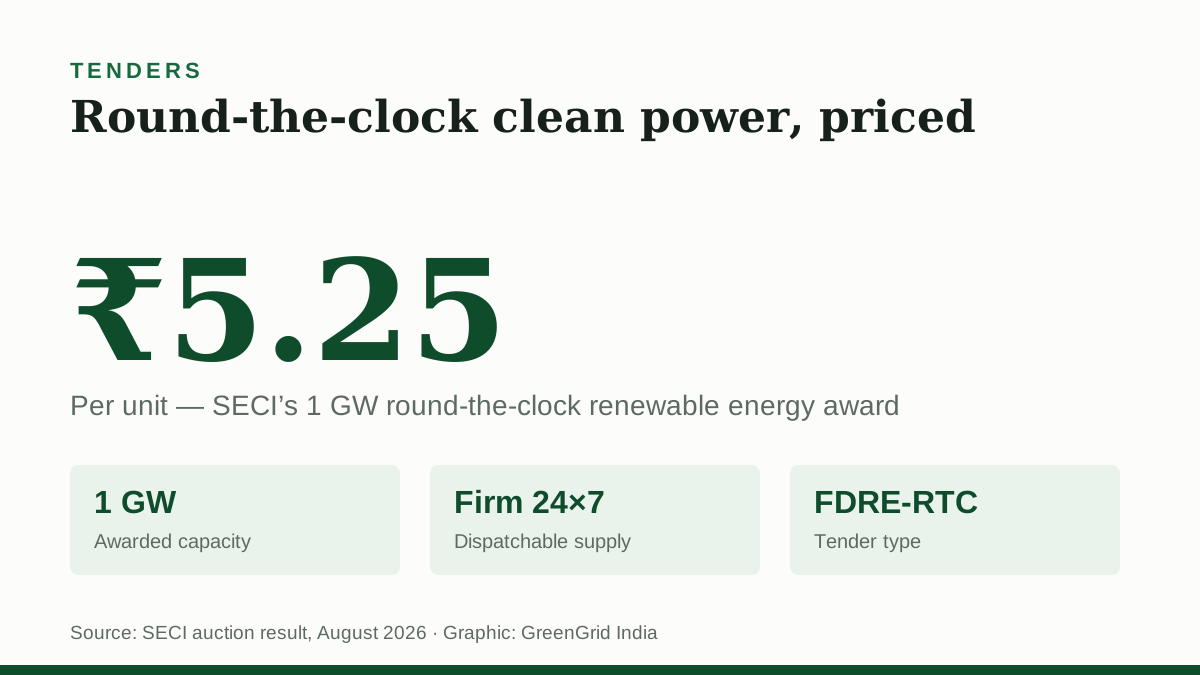
The Solar Energy Corporation of India (SECI) has completed a tender for 1 GW of firm and dispatchable renewable energy on a round-the-clock (FDRE-RTC) basis, with the auction clearing at a tariff of ₹5.25 per unit.
Round-the-clock renewable power bundles solar and/or wind with storage and firm-supply obligations so the developer commits to delivering a defined quantum of clean electricity across the day and night, not just when the sun shines or the wind blows. It is the product category that turns variable renewables into something a distribution company can dispatch like conventional baseload.
Why ₹5.25 is the number to note
A few years ago, “firm” renewable power carried a steep premium over plain solar. That premium has been compressing fast as battery costs fall and developers get better at optimising solar-wind-storage portfolios against a delivery profile. At ₹5.25/kWh, round-the-clock clean power is landing in the zone where it competes with new thermal generation on price — while offering a fixed, long-term tariff that fuel-exposed coal cannot promise.
Part of a broader FDRE push
The award arrives alongside a wave of firm-and-dispatchable tendering. SECI has separately invited bids for 4,800 MWh of FDRE capacity backed by co-located energy storage, seeking assured supply during peak-demand windows. The common thread: procurement is shifting decisively from “cheapest kilowatt-hour” to “cheapest reliable kilowatt-hour.”
For the sector, that shift is the bridge between India’s capacity milestones and its generation goals. Building 300 GW of non-fossil capacity is one achievement; being able to call on it at 9 p.m. is another — and RTC awards like this one are how the grid gets there. Expect more of these tenders, and continued downward pressure on the firming premium, through the rest of 2026.