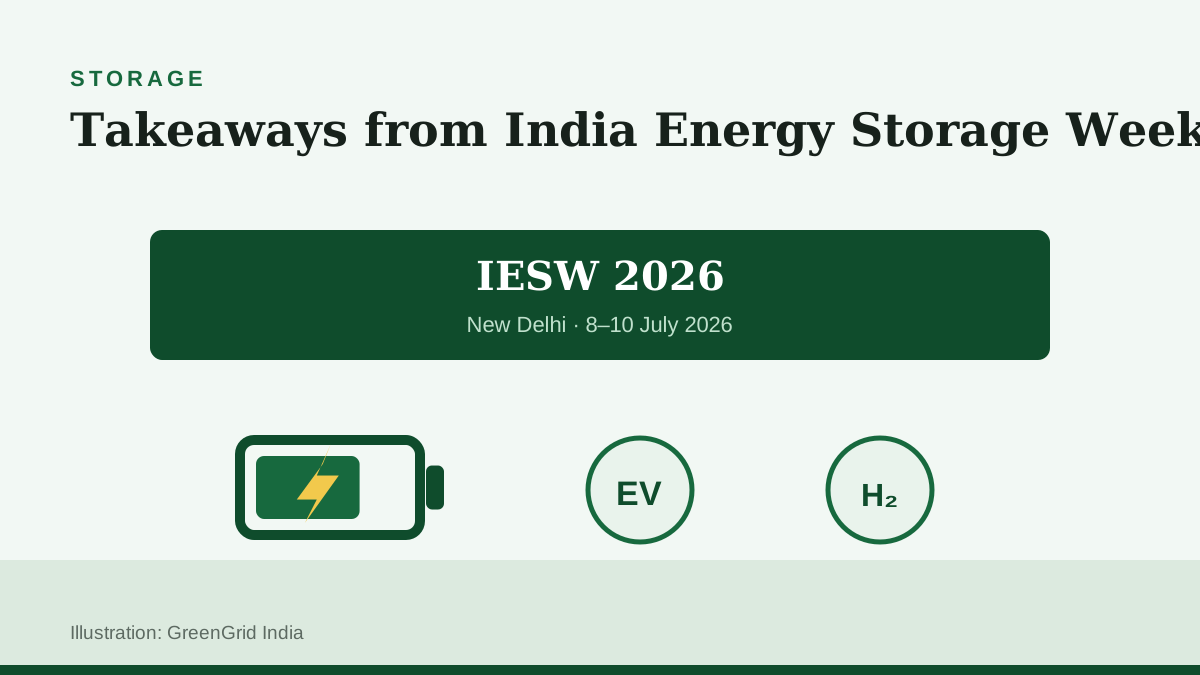
The 12th edition of India Energy Storage Week (IESW), hosted by the India Energy Storage Alliance in New Delhi from 8–10 July, landed at a telling moment: six months into a year in which India’s operational battery fleet has grown eleven-fold. The event drew participants from 15 countries — including Germany, Australia, Japan, the US and South Korea — with over 200 exhibitors and a delegate list reported above a thousand.
A few themes dominated the halls.
From procurement to production
Previous editions revolved around tender design and viability gap funding. This year the conversation moved upstream: domestic cell manufacturing. With gigawatt-hours of demand now bankable, multiple exhibitors showcased plans for Indian cell-to-pack capacity, and the corridor debate was less “will India make cells?” than which chemistries — LFP dominant, with sodium-ion pitched hard for stationary applications.
Mobility and stationary storage are converging
The EV pavilions were bigger than ever, and the interesting conversations sat at the seam between vehicles and the grid: battery swapping economics, second-life packs for stationary use, and the readiness of Indian discoms for managed charging.
Hydrogen keeps its seat
Green hydrogen sessions were more sober than in the hype years, but the steel and refinery pilot rounds (bids for the former were invited just before the event) kept long-duration storage and electrolyser flexibility on the agenda as the decade’s next procurement frontier.
The unofficial consensus of the week: storage in India has crossed from policy experiment to infrastructure class. The constraint now is execution — land, connectivity, commissioning crews — the same bottlenecks the solar industry knows intimately. The suppliers filling the exhibition halls are betting those get solved.