Every few months it is worth stepping back from the weekly tender-and-tariff churn to look at the stock rather than the flow. Here is where India’s renewable fleet stands as of mid-2026.
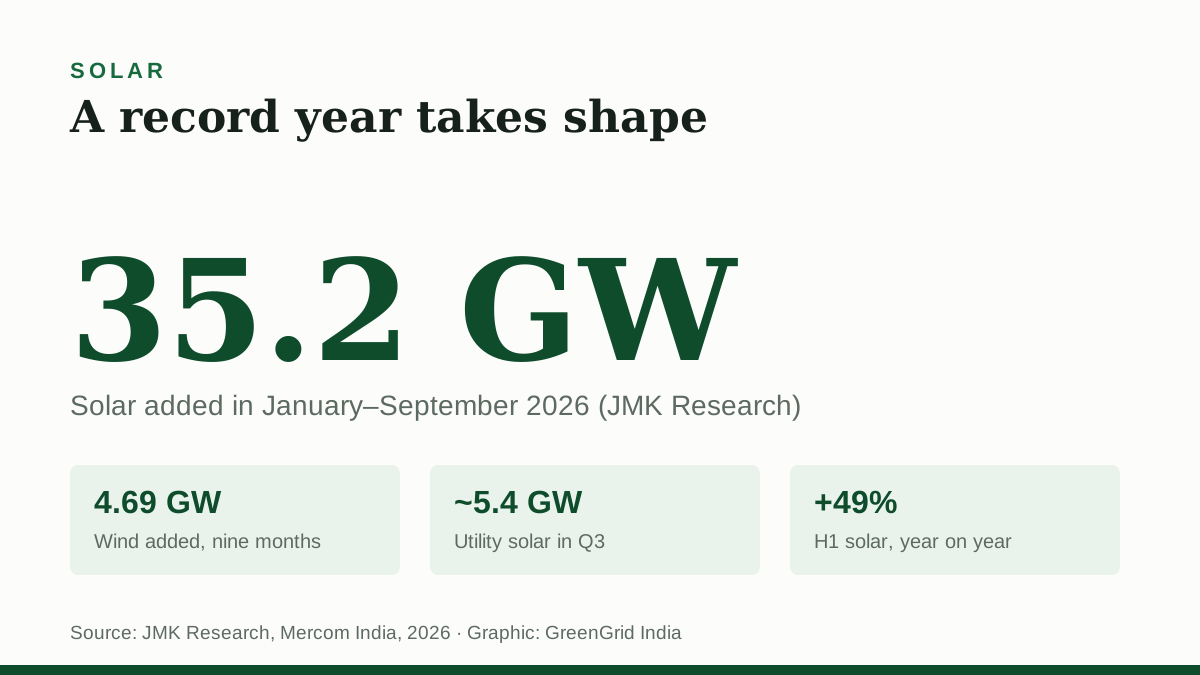
Installed solar capacity has crossed 157 GW, and renewables (including large hydro) account for roughly 42.5% of India’s total power capacity. The overall renewable fleet stands near 288 GW, a base that ranks India third globally in installed renewable capacity.
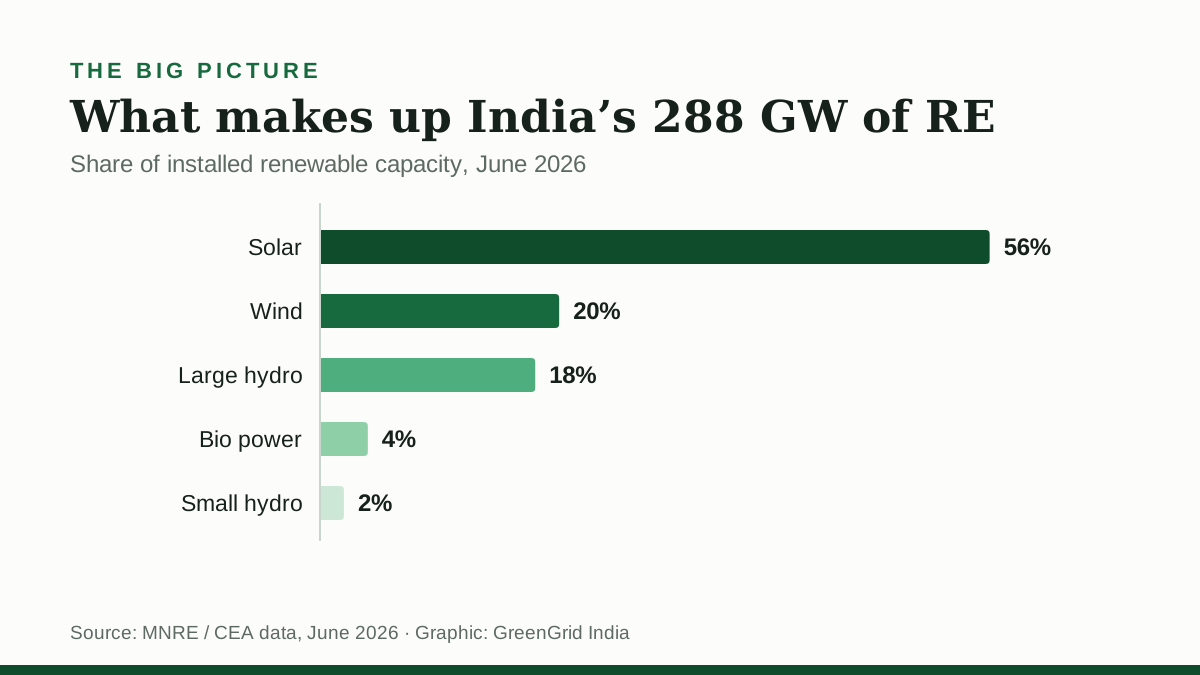
What’s in the 288 GW
- Solar — about 56%. The dominant and fastest-compounding slice, split roughly three-to-one between utility-scale and distributed installations.
- Wind — about 20%. Still the second-largest source, but growing slowly (2.9 GW added in H1 2026) and losing share.
- Large hydro — about 18%. The legacy backbone, increasingly valued for the flexibility and pumped-storage potential of its reservoirs rather than raw capacity growth.
- Bio-power (~4%) and small hydro (~2%) round out the fleet — steady, niche and largely policy-driven.
Capacity is not generation
The usual caveat applies with extra force at these percentages: because solar and wind run at lower capacity factors than coal or hydro, renewables’ share of generation remains well below the 42.5% capacity share. Closing that gap is precisely what the storage boom and firm-power auctions are for — turning midday gigawatts into evening ones.
The distance to 500
The 2030 target of 500 GW of non-fossil capacity requires adding roughly 200+ GW in about four and a half years — say 45–50 GW annually, sustained. H1 2026’s ~29 GW pace, annualised, clears that bar for the first time. The target that looked aspirational when announced now looks merely difficult: achievable if transmission, land and discom demand keep up, and missable if any of the three slips.
That, in one sentence, is the story this publication expects to spend the next four years covering.