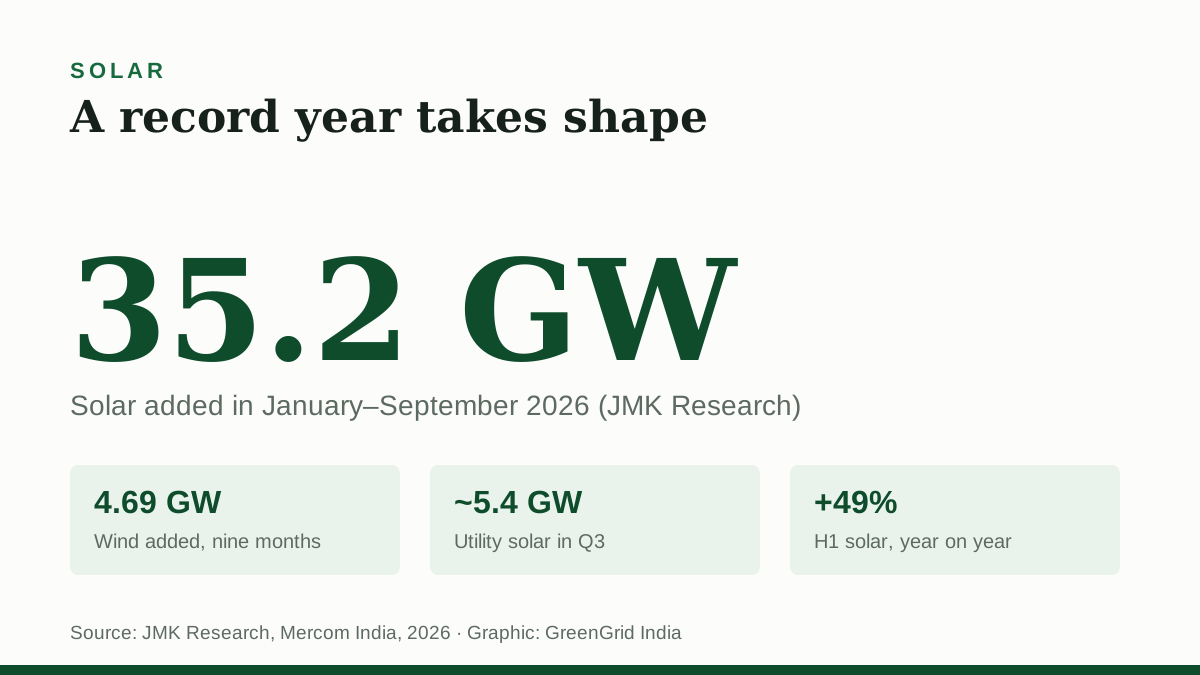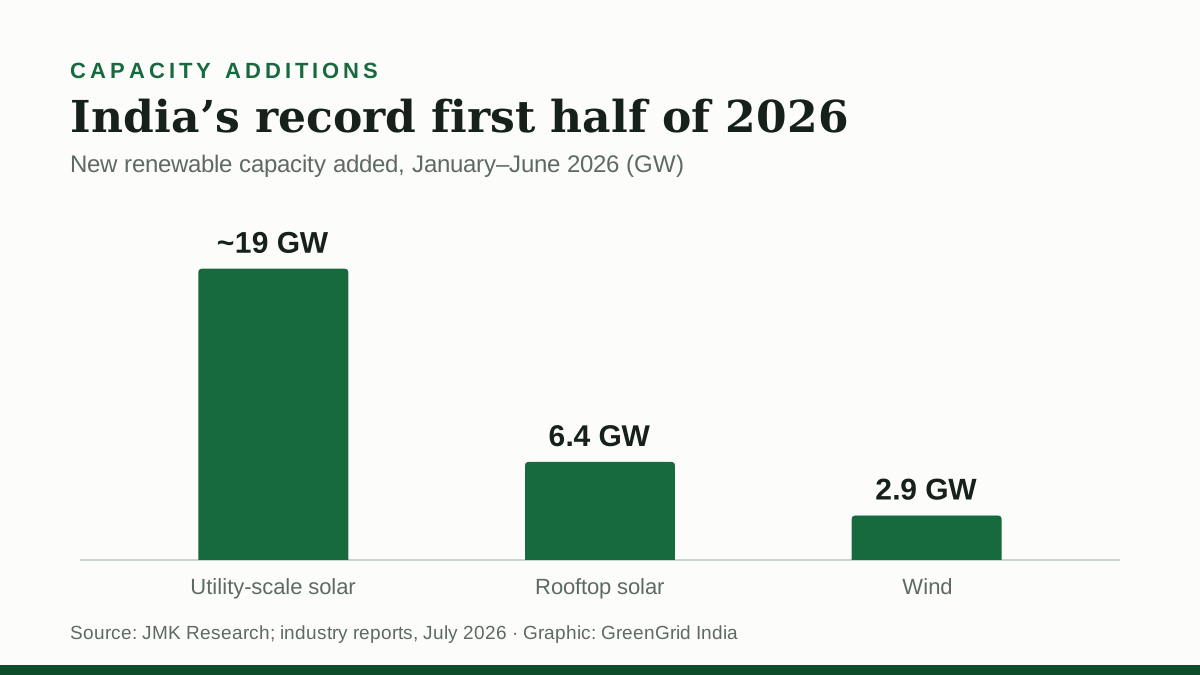
India installed a record of roughly 29 GW of new solar and wind capacity in the first six months of 2026 — the strongest half-year in the country’s history, according to figures compiled by research firms tracking the market.
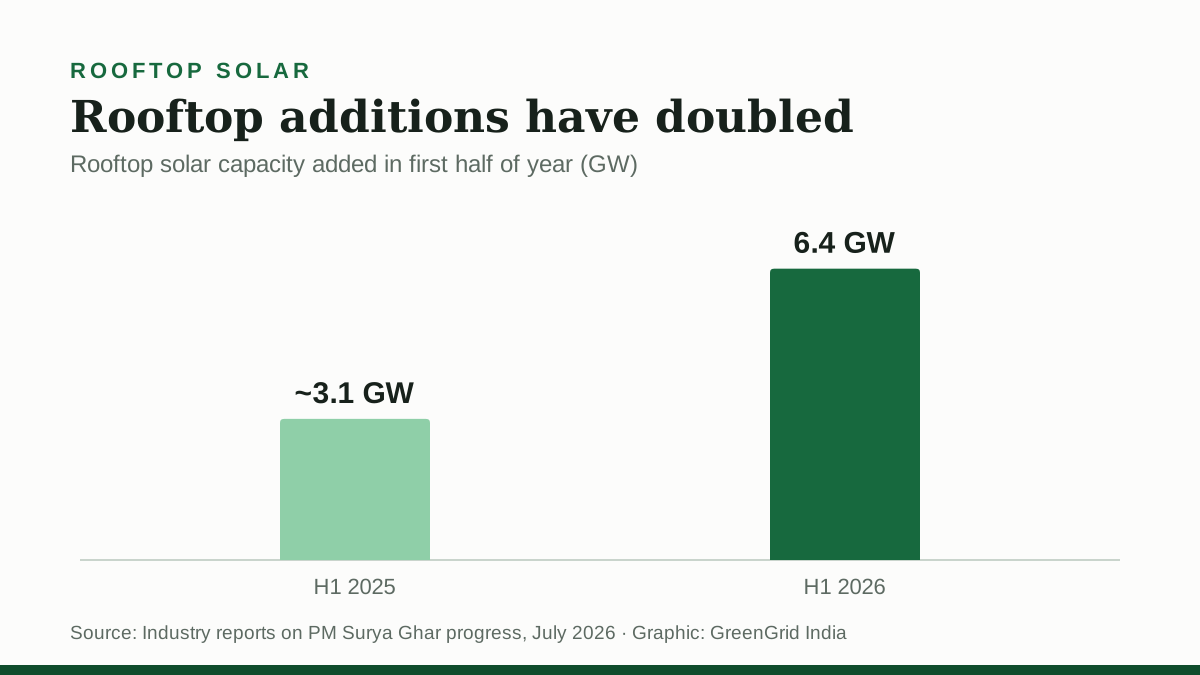
Solar did the heavy lifting. Around 26 GW of solar PV was added between January and June, of which approximately 19 GW was utility-scale — up about 32% from the same period in 2025. Rooftop solar contributed a further 6.4 GW, more than doubling year on year on the back of the PM Surya Ghar: Muft Bijli Yojana subsidy programme.
Wind was the laggard: about 2.9 GW of new capacity, down roughly 16% from the 3.5 GW installed in H1 2025.
The milestones stacking up
The record half pushed India’s cumulative renewable energy capacity to about 288 GW as of June 2026. Solar now accounts for roughly 56% of installed renewable capacity, with wind at around 20%, large hydro at 18%, and bio-power and small hydro making up the rest.
A few things stand out in the numbers:
- Gujarat and Rajasthan dominate. The two western states together accounted for more than half of H1 solar additions — about 7.6 GW and 6.6 GW respectively.
- Rooftop is no longer a rounding error. At 6.4 GW in six months, residential and commercial rooftops delivered nearly a quarter of all solar additions.
- The pipeline remains deep. Tendering activity by SECI and state agencies continues at pace, increasingly bundled with storage.
The road to 500 GW
India’s target is 500 GW of non-fossil capacity by 2030. Sustaining ~50–60 GW of annual additions is exactly the run-rate that target requires — and for the first time, the first half of 2026 suggests the market can deliver it. The open questions are familiar: transmission build-out keeping pace with generation, discom offtake, and whether wind can find a second wind.
We will be tracking each of these threads in the weeks ahead.