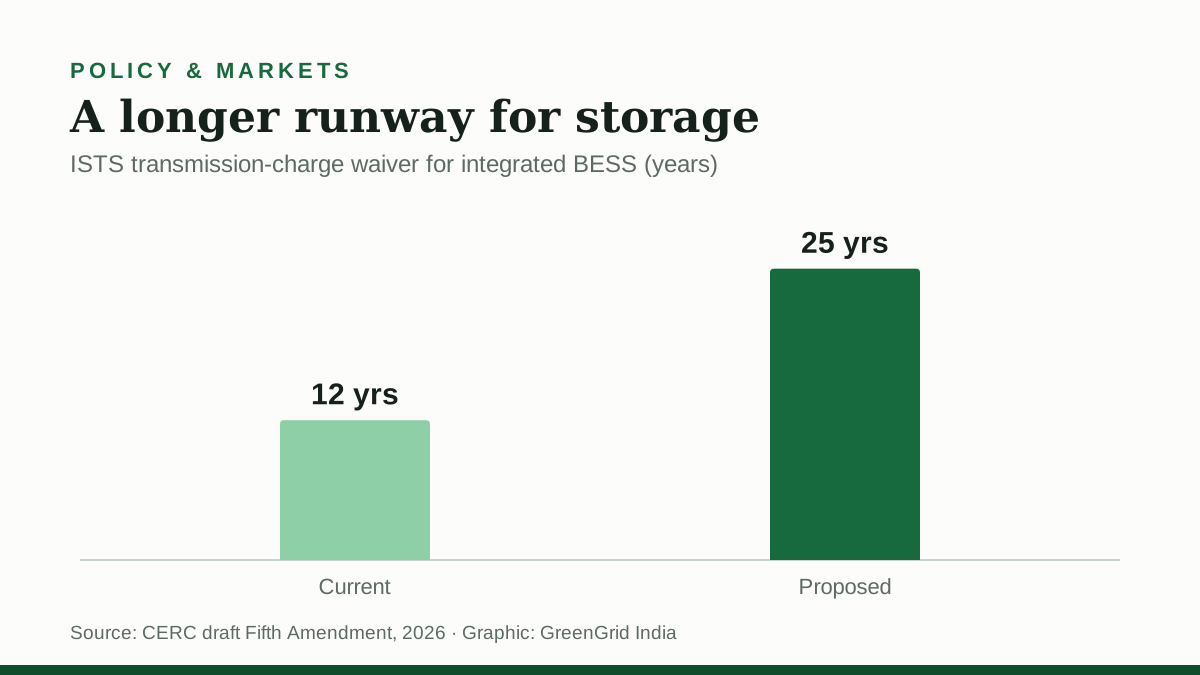
A draft regulation could meaningfully improve the economics of storage-backed renewables. The Central Electricity Regulatory Commission (CERC) has proposed extending the inter-state transmission system (ISTS) charge waiver to 25 years for battery energy storage systems that are an integral part of a renewable energy generating station (REGS) or a renewable hybrid generating station (RHGS) — up from the current 12 years.
The change is part of the draft Fifth Amendment to the CERC (Sharing of Inter-State Transmission Charges and Losses) Regulations, 2026. CERC has invited stakeholder comments up to 31 August 2026.
What it changes
ISTS charges are the tolls a project pays to move power across the national transmission grid, and waiving them has been one of the most powerful levers behind India’s renewable build-out. Extending the waiver for integrated storage from 12 to 25 years — roughly the full life of a project’s power-purchase agreement — removes a cost cliff that previously appeared midway through a battery’s operating life.
The draft attaches conditions to target the relief:
- A firm connectivity start date between 1 July 2025 and 30 June 2028;
- A signed PPA or PSA of at least seven years, executed on or before 31 December 2026;
- Commissioning within two months of General Network Access becoming effective.
Why it matters
Storage is the piece of India’s transition that most needs its economics de-risked. By aligning the waiver with a project’s contracted life, CERC would make co-located batteries — the kind now being mandated in FDRE and round-the-clock tenders — cheaper to finance and easier to bank. It reinforces a clear policy direction visible across this month’s news: reward clean power that can be delivered when needed, not merely generated.
If adopted after the consultation, the amendment would strengthen the business case for exactly the storage-heavy projects the grid increasingly depends on. Developers and lenders will be watching the final text closely once the comment window closes at the end of August.