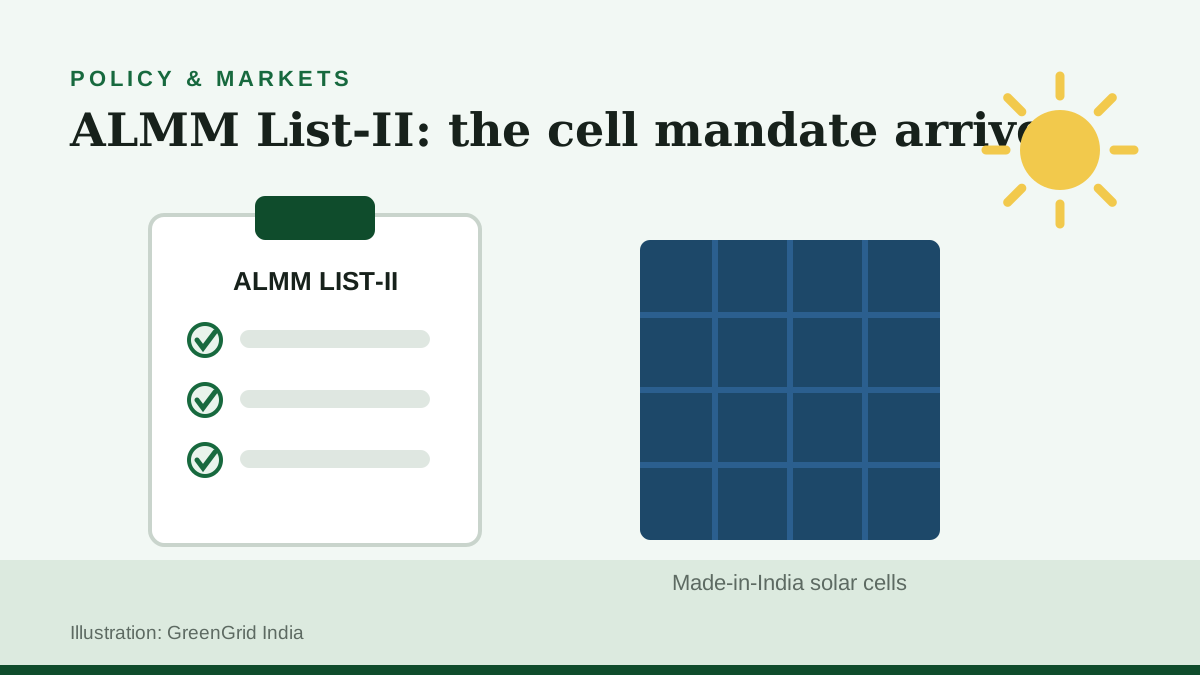
One of the most consequential policy switches in Indian solar quietly flipped this June: the Approved List of Models and Manufacturers (ALMM) List-II came into force, extending the domestic-content requirement from solar modules down to solar cells.
Under the regime, projects in covered categories — government tenders, government-assisted schemes, and programmes like PM Surya Ghar and PM-KUSUM — must now use modules made with cells from manufacturers on the approved domestic list, not just domestically assembled modules.
Why it matters
India’s module assembly capacity has ballooned to roughly 172 GW, but cell capacity sits far behind at around 27 GW. That gap has been filled by imported cells — overwhelmingly from China — meaning much of “Make in India” solar was, in practice, Indian lamination around Chinese wafers and cells.
List-II is designed to force the next layer of the supply chain onshore. Combined with the Production Linked Incentive (PLI) scheme, it has already triggered a wave of cell (and increasingly wafer and ingot) capacity announcements, with integrated gigafactories consolidating multiple production stages under one roof.
Where it bites
The transition will not be painless:
- Cell supply is tight. With domestic cell capacity a fraction of module capacity, covered projects are competing for a limited pool of approved cells, with knock-on effects on module prices and delivery timelines.
- Costs rise in the short term. Domestic cells carry a premium over imports; analysts expect the gap to narrow as new capacity is commissioned through 2026–27.
- Open-access and merchant projects are outside the fence. Purely private projects can still import, creating a two-track market.
The bet embedded in List-II is the same one India made with modules: protect the market long enough for scale to arrive, and let scale bring costs down. The module bet largely paid off. The cell bet is now live.